
Kids Learn about Animals
Intellijoy Educational Games for KidsEducational
4.189.00 Reviews
- Version
- 2.4.3
- Installs
- 10.00K
- Age Rating
- Everyone
Screenshots
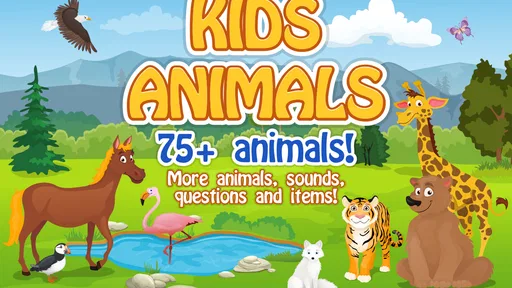
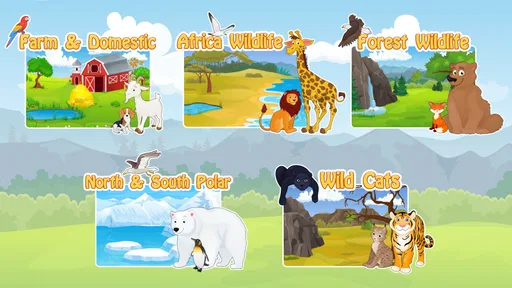
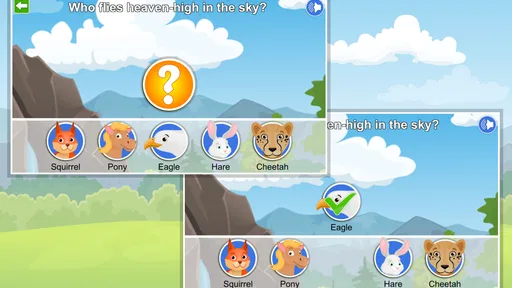
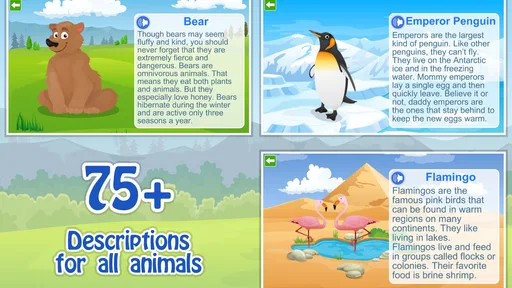
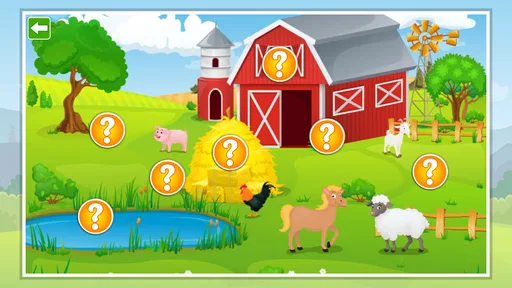
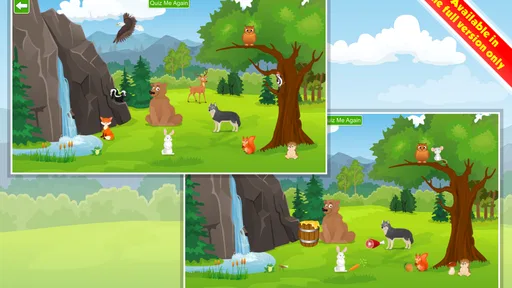
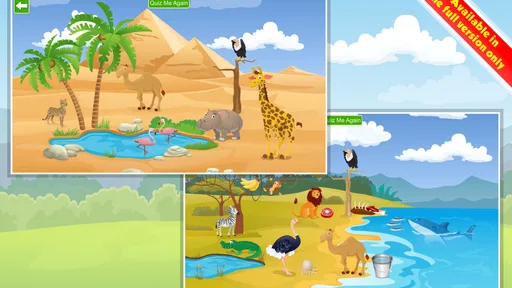
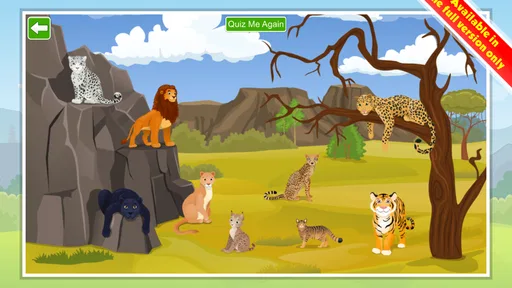
Our Review of Kids Learn about Animals
 Analysis by Appyee
I found Kids Learn about Animals most useful as a calm, shared-device game rather than as a complete early-learning program. It is an educational title from Intellijoy Educational Games for Kids, built around helping children become familiar with animals. The idea is simple, and that simplicity is exactly why it can work well during a short activity at home, especially when an adult is nearby to turn a few minutes of play into a conversation.
My overall impression is positive but specific: this is best for families looking for an approachable animal-themed learning experience, not for parents expecting a large curriculum, detailed progress reports, or a game that will occupy a child independently for a long stretch. It has a 4.1 average from around 500 ratings, with over 80 written reviews, and its Everyone age rating makes the intended audience clear. I would consider it a focused learning tool for younger children, with the strongest value coming from how easily it fits into ordinary family routines.
How it works on a shared family device
In a household with one tablet or phone passed between siblings, the main advantage is that the subject is immediately understandable. A child does not need a long explanation before engaging with an animal activity. That makes it suitable for a quiet moment while an adult prepares dinner, for a short turn after school, or for a parent and child sitting together before bedtime.
I would use it in short sessions rather than handing over the device without a plan. A useful routine is to let one child explore, then ask the child to name the animals seen or describe something remembered. If siblings are sharing, taking turns by activity or by a small time window is more practical than expecting them to cooperate indefinitely. The game can provide the prompt, but the conversation afterward is where much of the learning value comes from.
That shared-use approach also avoids a common problem with children’s games: the device becomes the entire activity. Here, the animal theme gives an adult an easy way to stay involved without needing specialist knowledge. You can ask whether an animal lives on land or in water, what sound it makes, or whether the child has seen one in a book or at a zoo. Those questions are not presented as extra app features; they are simple ways to extend the experience beyond tapping the screen.
For a younger child who is still building vocabulary, repeating animal names aloud can be more valuable than rushing through every available interaction. I found that a slower pace works better than treating the game like a test. Letting the child point, listen, answer, and try again creates a more comfortable learning rhythm. On a shared device, this also gives a parent a chance to notice whether the child is genuinely understanding or merely guessing from pictures.
What to prepare before handing over the device
The game is priced at $2.99, so it suits a family that prefers a focused paid title over downloading several free children’s games and sorting through them. The current version is 2.4.3, and it supports a minimum operating system of 7.1. Before giving the device to a child, I would check that the operating system is compatible and that the app is installed on the device the family actually intends to use.
That small preparation matters more with a shared phone than with a dedicated children’s tablet. A phone may contain messages, work apps, photographs, or payment tools, so the adult should open the game first and make sure the child can stay within the intended activity. I would also set the device aside from notifications where possible, because an incoming message can break concentration and invite a child to tap somewhere unrelated.
There is another practical boundary worth establishing: decide in advance when the session ends. A child may not distinguish between finishing an animal activity and continuing to use the phone generally. Saying “we are doing animals for a few minutes, then the phone goes away” is clearer than relying on an abrupt removal. If several children use the same device, a simple turn-taking rule is equally important.
I would not assume that paying for the game removes every household-management question. The purchase makes the title easier to choose, but it does not replace supervision, device-level restrictions, or a family agreement about screen use. Those arrangements depend on the phone or tablet and the adults using it, not on claims I would attach to the game itself.
Coordinating turns, attention, and learning
Shared use works best when the adult assigns a purpose to each turn. One child might explore and name animals, while another listens and identifies a familiar one. For children at different stages, the older child can describe what is happening while the younger child handles the interaction. This turns a possible argument over the device into a small cooperative exercise, although it still requires an adult to keep the older child from taking over.
I would avoid comparing children by speed. A child who needs more time to recognize an animal is not necessarily learning less. The better measure is whether the child becomes more willing to say the word, remember it later, or connect it with a real-world example. If the app is used as a race, the strongest tapper may dominate while the quieter child gets little opportunity to participate.
A useful household workflow is to finish with the screen turned off and ask each child to recall two or three animals. Another is to pair the session with a picture book, drawing activity, or a walk where the child looks for birds and insects. These extensions are especially helpful because a compact animal game can introduce a topic but cannot provide the depth of a book, conversation, or real observation.
For a child using the device alone, I would keep expectations modest. The game may hold attention for a short learning break, but I would not choose it as a guaranteed solution for a long journey or a full afternoon. Its focused subject is a strength for repetition, yet it also means children who want constant novelty may finish exploring it sooner than they would a broader game.
Age context and the role of trust
The Everyone rating makes the title an easy candidate for a family library, but an age label is not a substitute for knowing a particular child. Some children will be ready to explore independently, while others will gain much more when an adult names the animals, repeats unfamiliar words, and explains the difference between guessing and remembering.
I would be most comfortable introducing it to a young child during a supervised first session. That lets the adult see whether the child understands the interactions and whether the content feels appropriately paced. After that, the family can decide whether short independent turns make sense. Trust should grow from observing the child’s use of the device, not simply from seeing a child-friendly rating.
For children who are learning English as an additional language, the animal theme may offer a useful reason to repeat basic vocabulary. An adult can pronounce each word naturally and connect it with a gesture or picture. However, I would not treat the game as a full language course. It can support recognition and conversation, but a child needing structured reading, spelling, or pronunciation practice will need other resources as well.
The same distinction applies to educational goals. If the aim is to make animal words familiar and enjoyable, this is a sensible choice. If the aim is to track academic progress, assign lessons, or document improvement across several subjects, I would look for a more comprehensive learning platform. The narrow focus is intentional, and it should be judged on that basis.
Where it fits beside typical alternatives
Compared with a general children’s video app, this game offers a more active reason to respond. The child is not only watching an animal appear; the activity invites participation and gives the adult something concrete to discuss. That makes it a better fit when the family wants a short, hands-on learning moment rather than passive entertainment.
Compared with a large subscription-based learning service, it is easier to understand and less demanding to organize. There is no need to choose from a broad course catalog before starting an animal activity. The trade-off is breadth. A full learning service may offer reading, numbers, creative work, progress tracking, and a larger sequence of lessons, while this title stays centered on animals.
Compared with a physical animal book, the game has the convenience of interaction and repetition on a device already in the home. A book remains better when the family wants to slow down, compare pictures, tell a story, or avoid screen time altogether. I would use both rather than treating one as a replacement for the other.
Compared with free games, the $2.99 cost is straightforward, but the decision still depends on how often the child returns to the subject. A paid app is worthwhile when it becomes part of a repeatable routine. If the child loses interest after one sitting, a library book or a free trial of a broader resource may offer better value for that particular household.
Specific strengths and real limitations
The strongest quality is focus. The animal subject gives the game an obvious purpose, and that helps adults introduce it without explaining a complicated story or set of rules. It is also approachable for a shared device because different family members can participate at different levels: one child can interact, another can answer questions, and an adult can connect the activity to everyday knowledge.
Another strength is its usefulness as a conversation starter. I would not measure its value only by how long a child stays on the screen. A brief session followed by naming, drawing, or looking for animals outside can make the experience feel much richer. That is a practical advantage for parents who want technology to support an activity rather than replace family interaction.
The main limitation is scope. This is not the right purchase for someone searching for a complete educational system or a game with many unrelated subjects. Its animal-centered design can be appealing precisely because it does not try to do everything, but families should be comfortable with that narrow purpose.
Another limitation is that the app should not be expected to manage household boundaries for you. Shared-device use still requires adult decisions about turns, notifications, purchases, and when the device is returned. If your priority is detailed child profiles, formal progress dashboards, or extensive family controls, I would look elsewhere and treat this game only as one small part of the setup.
Who should install it, and who should pass
I would recommend it to parents, grandparents, or caregivers who want a simple animal-themed activity for a young child and are willing to participate at least occasionally. It is particularly suitable for a family with one shared device, because the content is easy to revisit together and does not require every child to have a separate account or personal screen routine.
It also makes sense for a child who enjoys naming animals, matching pictures with words, or learning through repetition. The paid price is reasonable when the title becomes a regular part of short sessions, especially if the family prefers a focused app instead of a crowded collection of unrelated games.
I would skip it if you need advanced educational reporting, a broad subject range, or a long-form game with deep progression. I would also skip it if the child strongly dislikes repetition or if the household is trying to eliminate screen-based activities. In those cases, an animal book, toy set, museum visit, or outdoor observation may be a better match.
Families with children at very different ages should also think about the older child’s role. An older sibling may enjoy helping, but the game is unlikely to satisfy a child looking for complex strategy or detailed scientific information. It works best when everyone understands that the goal is early familiarity and shared conversation, not advanced zoology.
My household verdict
Kids Learn about Animals is a small, purposeful educational game from Intellijoy Educational Games for Kids. It was released on February 11, 2012, and has reached over 10 thousand installs, which places it in the category of a focused title rather than a massive all-purpose platform. Its Everyone rating, $2.99 price, and animal-centered design make it easy to consider for a family device, provided the operating system meets the stated minimum of 7.1.
My recommendation is to treat it as a guided activity with room for repetition, not as an electronic babysitter or a complete course. Open it with a child, establish whose turn it is, keep the session focused, and follow the screen time with a question or real-world connection. That approach brings out its best qualities while keeping its limitations visible.
The right reason to choose it is not that it replaces books, conversation, or broader learning tools; it is that it gives a family an uncomplicated way to begin talking about animals together. For that purpose, I think it earns a place on a shared device. Just keep the expectations narrow, the household boundaries clear, and the adult involved enough to turn a few taps into meaningful learning.
Verdict
Strengths of Kids Learn about Animals
- Bright visuals and friendly animal sounds keep young children engaged.
- Simple navigation makes it easy for preschoolers to explore independently.
- Covers a broad range of familiar animals and basic facts.
- Interactive activities help reinforce recognition and memory.
- Suitable for short, screen-time learning sessions at home or school.
Limitations of Kids Learn about Animals
- Some activities may feel repetitive after extended use.
- Educational content is mainly aimed at younger preschool children.
- Limited difficulty options may not challenge older kids.
- Audio and animations can be distracting in quiet environments.
- Parents may need to supervise younger children during first use.
Other Releases by Intellijoy Educational Games for Kids
View All
Kids Numbers and Math
Educational4.1

Kids Learn to Read
Educational4.3

Kids Learn Letter Sounds
Educational4.3

Kids Learn Shapes 2
Educational4.3
Similar Picks in This Category
View All
Little Panda Policeman
BabyBus4.0

Monster Trucks Game for Kids 2
Raz Games4.1

Little Panda's Chinese Recipes
BabyBus4.4

Little Panda's Restaurant
BabyBus4.4

Little Panda's Ice Cream Games
BabyBus4.3

Baby Panda Care
BabyBus3.8
Frequently Asked Questions
What is Kids Learn about Animals?
Kids Learn about Animals is an educational app designed to introduce young children to animals through colorful images, simple descriptions, sounds, and interactive activities. It generally covers familiar pets, farm animals, wild creatures, birds, and sea life. The app is intended to make early learning entertaining while helping children recognize animals, remember their names, and discover basic facts at their own pace.
What age group is Kids Learn about Animals suitable for?
The app is mainly suitable for preschool and early elementary-school children, although the ideal age may vary depending on the child’s reading and attention level. Younger children can explore the pictures, sounds, and spoken content with a parent, while older children may enjoy answering questions and learning facts independently. Adult supervision is recommended for first-time users.
Does Kids Learn about Animals require an internet connection?
Some features may work without an internet connection after the app has been installed, which is useful for travel or situations where Wi-Fi and mobile data are unavailable. However, advertisements, external links, updates, or additional content may require internet access. It is best to open the app once while connected and check which lessons and activities remain available offline.
Is Kids Learn about Animals safe for children to use?
The learning content is created for children, but parents should still review the app’s settings, advertising behavior, privacy information, and any links leading outside the application. Depending on the version, the app may include ads or optional purchases. Using parental controls and supervising younger children can help prevent accidental taps, downloads, or access to unsuitable external content.
Is Kids Learn about Animals free to download and use?
Kids Learn about Animals may be available as a free download, but the exact features included at no cost can depend on the Android or iOS version. Some editions may contain advertisements, locked sections, or optional in-app purchases. Before downloading, parents should check the store listing for the current price, supported devices, subscription details, and purchase requirements.
Play our best games!


